Mississippi, USA — Est. 2026
His Forge. His Standards. My Fire.
My father worked metal. I make watches — built the way he built everything: to be used, serviced, and handed down.
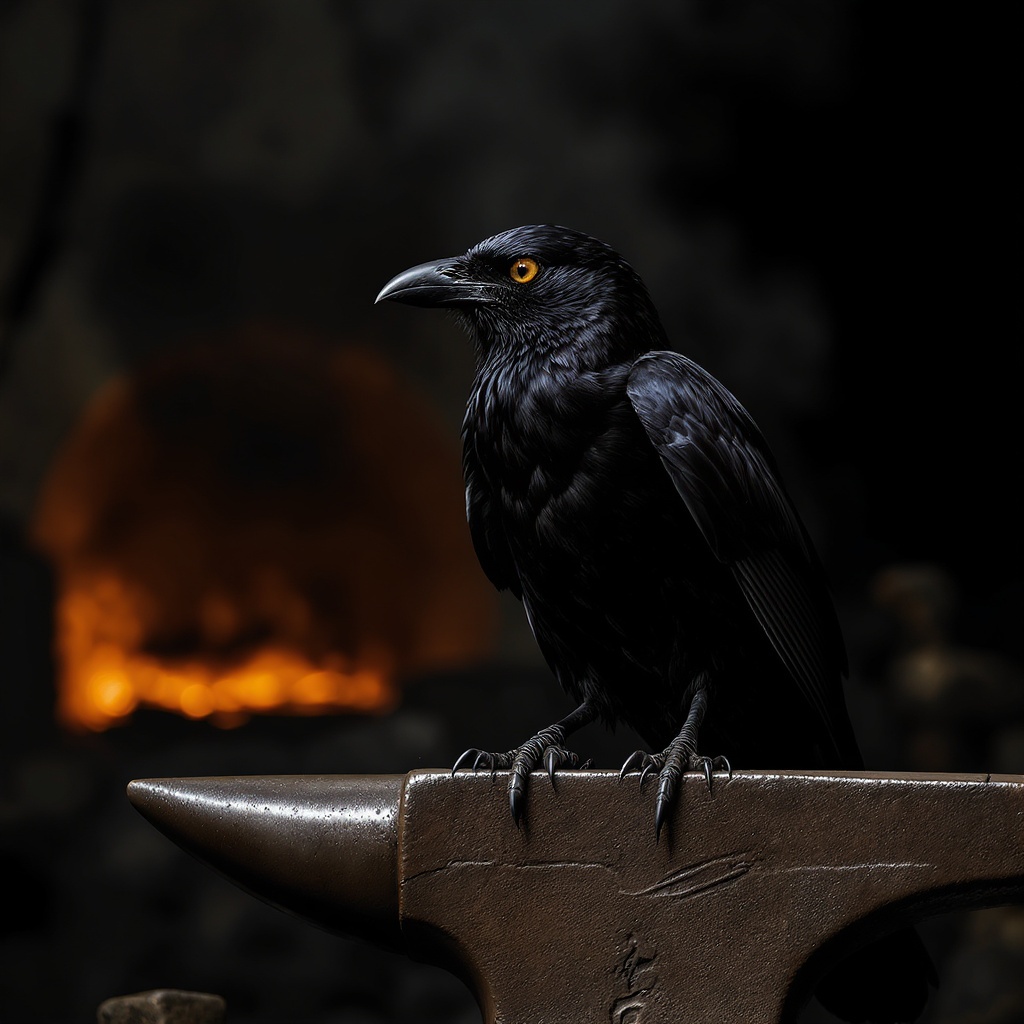
My father worked metal. I make watches — built the way he built everything: to be used, serviced, and handed down.
My father, Kenneth, worked metal for a living — a metallurgist who spent his days studying how steel behaves and how it fails. On his own time, he was a blacksmith. He forged. He invented. He left behind an anvil, a forge, and the knowledge to run them.
He also loved bears. They were all over his workshop — no reason, no symbolism. He just loved them. Bjorn is the old word for bear.
So the mark was obvious: an anvil and a paw, on the back of every watch.
I make watches now — smaller metal than my father worked, held to tighter tolerances, but the same hands and the same idea. Make something well enough that it outlasts you, and can be kept running by the people who come after. He didn't just leave me tools. He left me a working forge, and a standard to build to.
My father told me that. He was a metallurgist at Caterpillar — a man who held patents, ran a forge, and could tell you what was wrong with a piece of metal by looking at it. He taught me that the grade stamped on a bar of steel tells you almost nothing about what's actually inside it. Two bars can both say "316L" and be different animals.
When he passed, I inherited his forge, his anvils, and his reference library. They sit on the farm now, where Bjorn Forge is built. And when I started making watches, I found I couldn't do what most brands do — buy "watch steel" and move on. I had to know the steel. The melt. The inclusion rating. What was actually in it. It's the only way he taught me to work.
Our obsession with quality starts with the bar stock. We start with remelted stainless — steel that's been refined a second time to strip out the microscopic inclusions that dull a polish and invite corrosion. Most watchmakers never ask for it. It costs more, and the customer can't see it on a spec sheet. We ask for it anyway, and we keep the mill certificate that proves exactly what went into your watch.
Every case is designed in-house and milled locally, where we can watch it take shape and answer for every cut. It's passivated to lock in its corrosion resistance, then finished by hand — polished to a mirror that keeps its edges crisp, or brushed to a working satin, depending on the watch.
The parts we don't make ourselves, we choose with the same discipline. Hands and dials come from vetted vendors held to our standard, not the cheapest one — down to custom GMT hands made to our own spec rather than pulled from a catalog. Where we can't forge it, we still answer for it.
None of this is something to brag about on a spec sheet. It's something you feel. A case that sits right in the hand and stays that way. A finish that catches light the way it should. Steel chosen the way my father would have checked it — by the melt, not the marketing.
That's the whole idea. Build it the way he built things: to be right, and to last.
Plenty of brands make that claim. We back it with specifics. Hand-finished applied indices. Individually timed movements. Case surfaces that pass the light test. The difference between a watch that's finished and one that's merely assembled is the difference between a tool and an heirloom — and it's the only difference we care about.
Substantial. Decisive. The kind of wrist presence that doesn't ask for attention.
Anyone can source a case and a movement and bolt them together. The craft lives in what happens next — the bevels, the brushing, the seating of every index by hand. We don't cut that corner, because cutting it is the only way to hit a lower price, and the price isn't the point.
The watch world has enough homages and reissues. Bjorn Forge designs have a point of view. Industrial shapes. Bold proportions. Risks the big Swiss houses are too cautious to take — and finishes that challenge watches at twice the price.
No retail markup. No distribution overhead. We sell direct so we can afford to finish watches properly. What you pay reflects what went into the watch — not a marketing budget.
Clean case, no crown guards. The Sellita SW300-1 — thin, precise, exactly right for a dress watch. Named for Odin's raven of thought.
Coming 2026Most watches are "316L" and leave it there. We don't.
Our obsession with quality starts with the bar stock. Huginn begins with remelted stainless steel — cleaner at the microscopic level, with fewer of the flaws that cloud a polish or invite corrosion. The case is designed in-house, milled locally, passivated, and finished by hand to a mirror polish with bevels kept deliberately sharp.
What we don't make, we choose carefully: hands and dials come from vetted vendors held to our standard. We keep the mill certificate for the steel in every case. If you want to know exactly what's on your wrist, we can show you.
It isn't a number to memorize. It's a watch that feels right and holds its luster — the quiet kind of quality you stop noticing because it simply works.
Rotating bezel, 120 clicks, full 360°. Signature Raven Feather GMT hand in DLC. Sellita SW200-1. Named for Odin's raven of memory.
Coming 2026Muninn is built for a real life. Its case starts from the same certified, remelted stainless as the rest of the line — then it's surface-hardened, a treatment that lets stainless shrug off the scratches of daily wear without giving up the corrosion resistance that makes good steel good.
It's the kind of over-engineering that costs us more and that you'll mostly notice by what doesn't happen to your watch. No badge of honor. Just a tool that stays looking like one you'd be proud to carry.
316L stainless, 38–42mm. Multi-faceted and hand-finished — brushed flanks, polished bevels, drilled lugs. Every surface checked before assembly.
Swiss Sellita — SW300-1 for dress, SW200-1 for tool and GMT. Individually timed before assembly. We name the movement, because you should know what you're wearing.
Double-domed sapphire, anti-reflective both sides. Screw-down crown. 100m water resistance across every model.
"A watch shouldn't just tell time.
It should make you feel something."
That's why we do it this way. An anvil and a paw on the back of every one — the mark of a forge that was here before me, and a standard meant to outlast us both.
Production runs are small and serial-numbered. Join the list for first access, build updates from the bench, and the story behind each piece.
You're on the list.